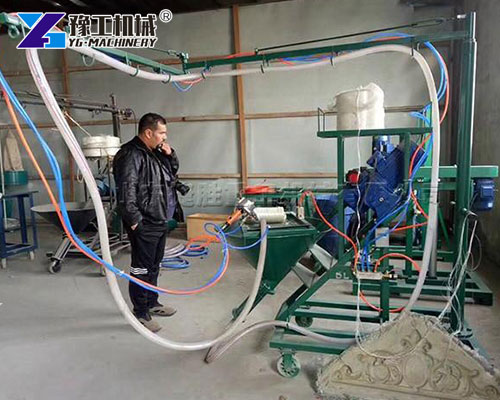
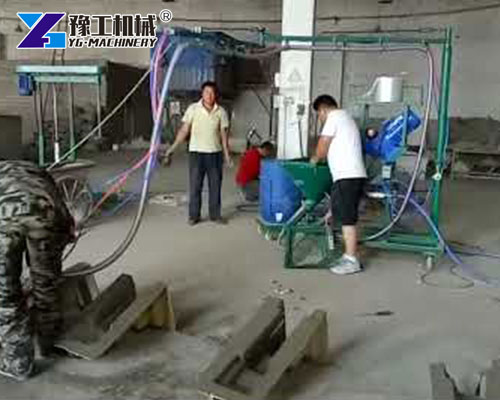
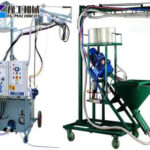
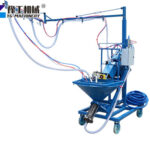
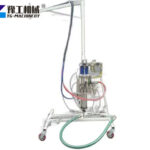
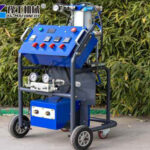
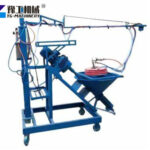
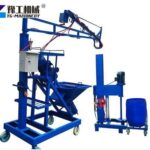
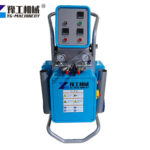
A Fiberglass Spraying Machine from YG Machinery was shipped to a GRC production factory in Malaysia. After installation and testing, the customer confirmed that the machine works smoothly and helps improve production stability in daily panel manufacturing.
The project focuses on real factory production, not laboratory conditions. Every adjustment was made based on real material behavior and operator feedback.
Why The Customer Needed A Better Spraying Method In Malaysia GRC Production
The factory in Malaysia produces architectural GRC panels for building decoration. These panels must look smooth, strong, and consistent in every batch.
Before using the Fiberglass Spraying Machine, the factory faced clear production problems:
Workers needed to do too much manual spraying
The fiber inside the concrete was not evenly spread
Some panels had weak points after curing
Large orders were hard to finish on time
The material itself also made production difficult. Cement mixed with glass fiber is thick, sticky, and easy to block if the spraying system is not stable.
This is why the customer started searching for a more stable GRC spraying machine for panel production instead of relying on manual work.
WhatsApp/WeChat/Phone: 86 138 3715 9132
How The Machine Was Matched To Real Production Conditions
When the customer first contacted us, the main focus was not only on machine power, but also on stability in daily factory use.
To match real factory conditions, several adjustments were made:
Spray pressure control system optimized for thick materials
The fiber cutting and mixing system has been improved to avoid clumping
Feeding system designed for continuous batch production
The customer also had one concern at this stage: humidity in Malaysia. High humidity can affect cleaning and material behavior. So, the maintenance access design was improved to make daily cleaning easier.
Engineering Adjustments Before Final Operation Start
Before the machine was fully accepted, the customer raised practical questions based on real factory experience.
They focused on three points:
Will fibers clump during continuous spraying
Can it handle complex mold shapes
Will it stay stable during long working hours
During testing, engineers adjusted the internal mixing structure of the system. The goal was simple: to make the fiber and cement mix more even before spraying.
The final adjustment result allowed the Fiberglass Spraying Machine to run continuously without blocking under normal production conditions.
At this stage, the architectural panel spraying system also showed better control when working with deep molds and curved shapes.
What Happened During Real Production In Malaysia Factory
After installation, the machine was used directly in daily production, not just for test runs.
The factory reported clear changes:
Panels became more consistent in surface quality
Workers spent less time on manual spraying
Production speed increased in batch orders
Stronger uniformity was observed after curing
At the same time, real production also showed limits that needed attention:
Material ratio must be controlled carefully for every batch
Fiber length has a strong influence on the final spraying result
The spray head needs regular cleaning after long use
In real conditions, the cement fiberglass spray machine works best when operators follow stable mixing rules.
This Malaysia case also proved that the GFRC concrete spraying machine Malaysia case is not just about equipment performance, but also about process control in daily production.
What This Case Means For Other GRC Factories
This project is not only about one factory in Malaysia. It shows a real production pattern that many factories face.
For example:
GRC factories using manual spraying will face uneven quality
GFRC manufacturers often struggle with fiber distribution
Large order production always needs stable repetition
The Fiberglass Spraying Machine is suitable for factories that want stable, long-term production instead of small experimental work.
Key lessons from this case:
Machine stability is more important than speed alone
Fiber mixing quality directly affects final product strength
Equipment must match the real factory environment, not only specifications
Training operators is part of production success
Automated spraying systems work best in continuous production lines