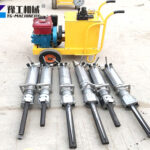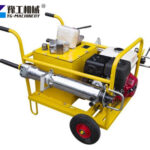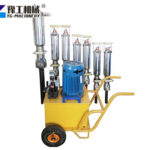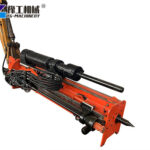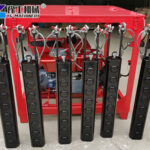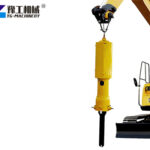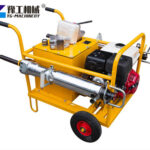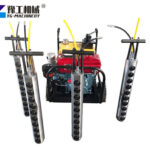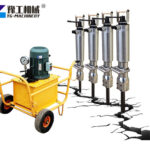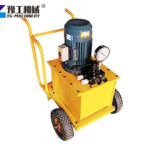
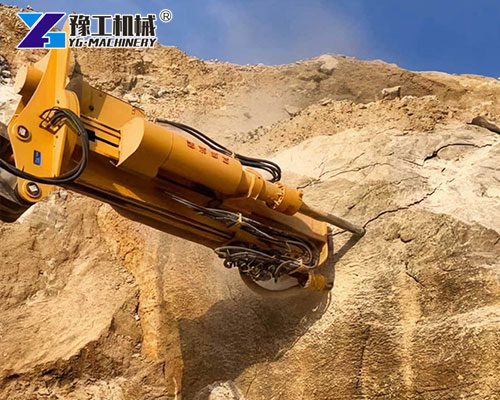
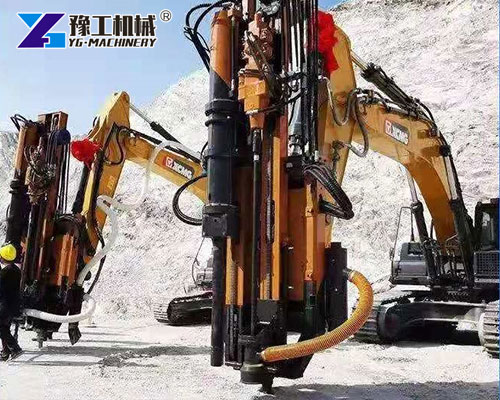
An Integrated Hydraulic Rock Drill and Splitter from YG Machinery was exported to a quarry project in Guatemala. The shipment has already been sent, and the equipment is now on the way to the customer’s site. This case shows how a compact, integrated rock-breaking solution can support real-world mining operations in difficult mountain conditions.
Project Background And Quarry Working Conditions
The customer is located in Guatemala and owns his own quarry resources. The site is in a mountain area with complex working conditions.
Rock conditions:
- High-hardness limestone formation
- Uneven natural cracks inside rock layers
- Hard to break using simple tools
Working environment:
- Mountain quarry with narrow access roads
- Limited space for equipment movement
- Frequent need to move between working areas
Customer equipment setup:
- One 20-ton excavator (main working machine)
- One 32-ton excavator (heavy support machine)
Main challenges:
- Traditional drilling and splitting systems work in separate steps, which reduces efficiency
- High cost when using blasting or subcontracting services
- Multiple machines create complex management on-site
In this situation, the Integrated Hydraulic Rock Drill and Splitter becomes a strong option because it combines drilling and splitting in one system, reducing repeated machine movement and saving time.
WhatsApp/WeChat/Phone: 86 138 3715 9132
Customer Selection Logic Of Integrated Hydraulic Rock Drill And Splitter Was Not Immediate
The customer did not choose the equipment initially. Several solutions were compared before the final decision.
Initial options:
- Standalone hydraulic rock splitter
- Traditional pneumatic drilling tools
- Outsourced blasting service
Customer decision logic:
- Improve usage of the existing 20-ton excavator
- Avoid buying a new full machine system
- Keep quarry operation flexible in different working zones
Final decision:
- Select the Integrated Hydraulic Rock Drill and Splitter attachment for a 20-ton excavator
- Not choose the 32-ton excavator solution due to higher cost and lower flexibility
The key point is that the customer focused more on system efficiency than equipment size.
Key Technical Questions And Communication Process For Integrated Hydraulic Rock Drill And Splitter
During the technical discussion, the customer raised an important concern.
Main questions:
- Do we need a separate air compressor system?
- Will extra air equipment make site setup more complex?
- Is it suitable for remote mountain quarry operation?
Potential problems the customer worried about:
- An air compressor takes up extra space on site
- More pipelines increase setup difficulty
- Higher transport and maintenance cost
These concerns are common in mining projects, especially in narrow mountain areas where space is limited.
Equipment Matching And Structural Optimization Of Integrated Hydraulic Rock Drill And Splitter
After engineering communication, the YG technical team provided a simple and practical solution.
Engineering solution:
- An air compressor system can be installed directly at the rear of the 20-ton excavator
- Balanced design according to the excavator’s weight structure
This solution improved system integration and reduced extra equipment demand.
Technical advantages:
- Less space occupied on the quarry site
- Higher mobility during movement between working areas
- No repeated pipeline installation work
- Better fit for mountain quarry transport conditions
Final result:
- The Integrated Hydraulic Rock Drill and Splitter was successfully matched with the 20-ton excavator
- System entered the final assembly and delivery stage
This step became the turning point of the whole project.
Equipment Matching Points And Real Working Challenges Of Integrated Hydraulic Rock Drill And Splitter
The system combines drilling and splitting functions in one structure.
Main features:
- Drilling + hydraulic splitting in one workflow
- Suitable for medium to hard rock layers
- Controlled splitting direction reduces secondary breaking work
Real site limitations:
- Equipment must be disassembled for mountain transport
- Operators need 3–5 days to get familiar with the system
- High temperature affects hydraulic oil stability
- Performance depends on operator skill level
Even with these limits, the system still improves the overall quarry workflow compared to separate machines.
Delivery, Installation, and Field Feedback Of Integrated Hydraulic Rock Drill And Splitter
Delivery process:
- Factory pre-assembly and testing
- Sea freight shipping to Guatemala
- On-site reassembly and system calibration
Technical support:
- Remote installation guidance from engineers
- Pressure adjustment based on rock hardness
- Step-by-step operator training
Customer feedback:
- Workflow is simpler than separate drilling and splitting machines
- The rock breaking direction is more controlled
- Less dependence on blasting work
- Better mobility after matching with a 20-ton excavator
Limit feedback:
- Very hard rock still needs a longer drilling time
- Efficiency depends on operator experience
- Hydraulic hoses need regular inspection under heavy use
Reference Value Of Integrated Hydraulic Rock Drill And Splitter For Future Buyers
This case is useful for many types of customers.
Suitable users:
- Quarry owners with existing excavators (especially 20-ton class)
- Mining or construction sites with blasting restrictions
- Mountain or remote working environments
Key learning points:
- Attachment systems can improve the use of existing excavators
- Integrated design is a system upgrade, not only a machine upgrade
- Air compressor system choice depends on site space and mobility needs
- Equipment selection must consider weight match, site condition, and transport limits
- Early engineering communication directly affects cost and efficiency
Related Posts: