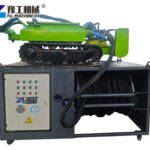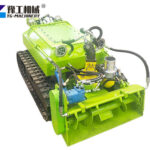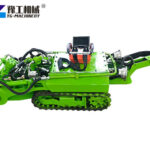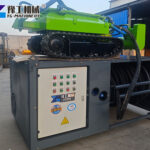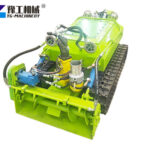

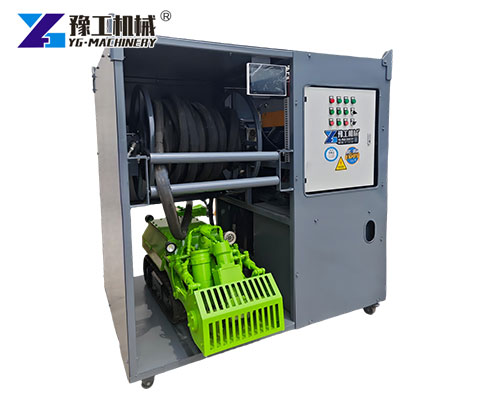
What Is An Industrial Tank Cleaning Robot?
An Industrial Tank Cleaning Robot is a remote-controlled machine used to clean large oil tanks, chemical tanks, and sludge pits without sending workers inside. It reduces danger from toxic gas, heat, and waste materials. It also shortens downtime because it can work for long hours.
This robot is designed to move inside dark and narrow tanks. Operators watch live video from a control station outside the tank. The robot performs cleaning tasks with high-pressure water, suction, and strong mobility. It can replace most manual work and gives stable cleaning results.
It is often used in oil refineries, chemical plants, wastewater plants, and fuel terminals.
WhatsApp/WeChat/Phone: 86 138 3715 9132
Industrial Tank Cleaning Robot Parameter:
| Dimension: | 1220*890*520mm | Speed: | 2.5-4KM/h |
| Self Weight: | 120kg | Designed Load: | 100-300kg |
| Waterproof: | IP68 | Rated Torque: | 100-500 NM |
| Track Width: | 130mm | Reducer Efficiency: | 65-85% |
| Gear Ratio: | 1:10-1:40 | Motor Voltage: | 380ACV (customized as local voltage) |
| Motor: | 0.75-1.5KW*2 | Climbing Ability: | ≤30°(can climb stairs) |
| Motor Rated Speed: | 1500r/min | Maximum Span: | 620mm |
| Cable Control Distance: | Standard 50m, maximum 150m | Over-Obstacle Capacity: | 130mm |
| Maximum Underwater Depth: | 30m | Power Supply: | Generator or 380V power supply |

Main Features Of The Industrial Tank Cleaning Robot
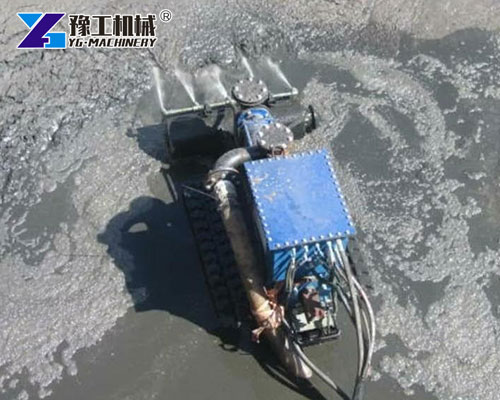
The Industrial Tank Cleaning Robot has several important features that make cleaning safer and faster.
Key Features
- Remote Operation: Workers do not need to enter dangerous tanks.
- High-Pressure Washing: Removes sludge, scale, and sediment.
- Strong Mobility: Moves through heavy sludge and uneven ground.
- HD Camera System: Helps the operator see inside the tank clearly.
- Explosion-Proof Parts: Safe for oil and chemical environments.
These features make the robot more reliable than many traditional cleaning machines.
How The Industrial Tank Cleaning Robot Works
The working process is simple and easy to control:
- The robot enters the tank through the manhole.
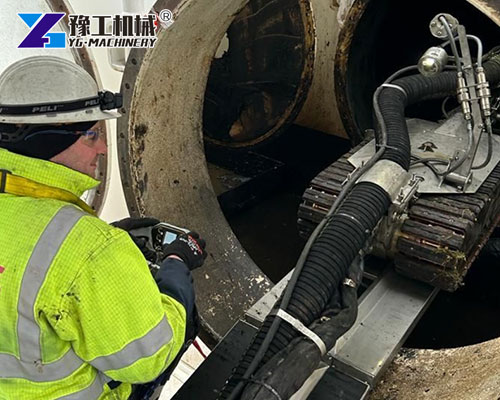
- Operators control the robot from a safe distance.
- High-pressure water jets break down thick sludge.
- A suction pump collects the waste and moves it outside the tank.
- The camera system shows real-time cleaning progress.
- The robot continues cleaning until the tank surface meets the standard.
This method is cleaner and safer than manual work, especially in oil and chemical tanks.
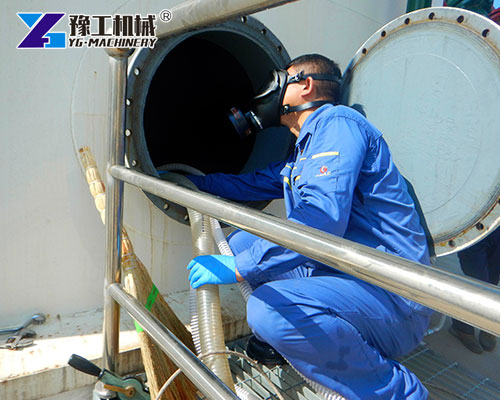
Advantages Compared With Manual Tank Cleaning
Using a robot instead of a cleaning team gives many benefits.
Benefits
- Better Safety: No workers enter the tank. This removes risks from toxic gas and fire.
- Higher Efficiency: The robot can run for long hours without rest.
- Lower Cost: Less labor is needed, and plant shutdown time is shorter.
- Stable Quality: Cleaning pressure and speed stay the same throughout the job.
- Easy to Record: Video records help check the cleaning quality.
These advantages make the robot a preferred choice for companies with strict safety rules.
Applications Of Industrial Tank Cleaning Robots
The Industrial Tank Cleaning Robot is used in many industries. Different tanks require different cleaning tools, but the robot adapts easily.
Refinery Storage Tanks
Refinery tanks often contain thick oil sludge. The oil tank cleaning robot removes heavy deposits and shortens tank downtime.
Chemical Storage Tanks
Chemical tanks may contain dangerous liquids. A no-entry tank cleaning robot protects workers from harmful chemicals.
Petrochemical Settling Pits
The robot can travel through dense sludge in settling pits and break down old deposits.
Wastewater And Sludge Tanks
The robot handles soft and hard sludge found in wastewater plants.
Fuel Terminals And Power Facilities
Large fuel tanks need regular cleaning. The robotic tank cleaning machine offers stable performance and reduces risk during maintenance.
Industrial Tank Cleaning Robot Cases
We have delivered the Industrial Tank Cleaning Robot to many countries. Two cases show how customers use it and what they say.
Nigeria
A refinery in Nigeria needed to clean a 10,000 m³ oil storage tank filled with heavy sludge.
- The robot completed the job in 5 days.
- Manual cleaning would have taken more than 15 days.
- The customer said the robot saved labor and reduced safety risks.
They reported that the robot worked smoothly even in deep sludge and required very little maintenance.
Bahrain
A chemical plant in Bahrain used the robot to clean chemical storage tanks.
- Workers did not need to enter the hazardous tank.
- The cleaning was completed faster than expected.
- The plant manager said the camera system made the job easier and safer.
The customer was satisfied and asked for another robot for their fuel terminal.
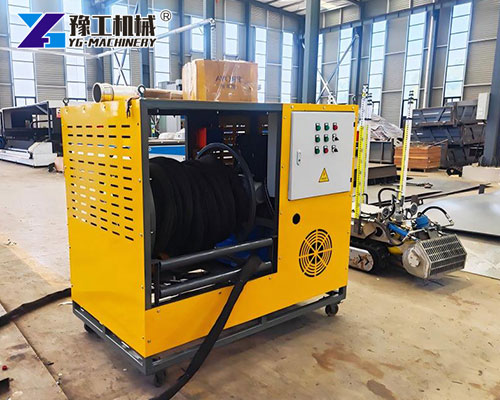
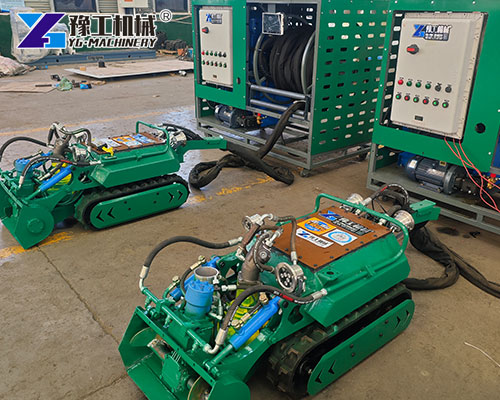
Why Choose Our Robotic Tank Cleaning System?
Our system is designed to offer strong cleaning power, long service life, and easy operation for global users.
Reasons To Choose Us
- Wide Experience: Many successful projects in the oil, chemical, and wastewater industries.
- Custom Solutions: We can upgrade tools to fit special tanks.
- Stable Performance: High-quality components reduce failure risk.
- Full Support: Training, spare parts supply, and remote service.
- Global Delivery: Fast shipping to Africa, the Middle East, Europe, and America.
Our Industrial Tank Cleaning Robot helps companies reduce accidents and improve cleaning efficiency.
FAQs
1. Can the robot work in explosive environments?
Yes. The robot uses explosion-proof parts suitable for oil and chemical tanks.
2. How does the robot enter the tank?
It enters through the standard manhole opening.
3. What size tanks can it clean?
It can clean tanks from small chemical tanks to large refinery tanks.
4. Do workers need special training?
Basic training is needed, but the system is easy to learn.
5. How long can the robot work continuously?
It can run for long hours depending on the sludge thickness and pump capacity.
WhatsApp/WeChat/Phone: 86 138 3715 9132